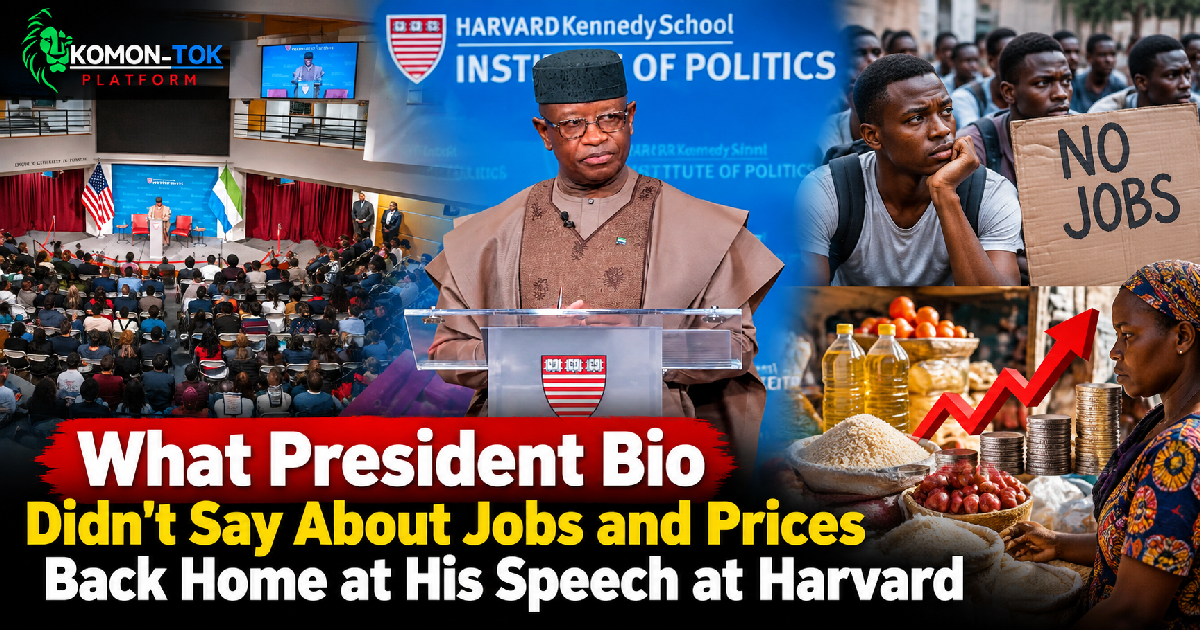
President Julius Maada Bio delivered a commanding performance at Harvard University on Monday, telling world powers that Africa will no longer accept empty partnerships.
But while his speech drew applause at the John F. Kennedy Jr. Forum, it left unanswered questions about the economic pressure facing Sierra Leoneans at home.
Speaking on “Africa and the Shifting Geopolitical Landscape,” hosted by Dr Zoe Marks of Harvard’s Centre for African Studies, Bio unveiled what he called a new standard for foreign engagement: every deal must pass four tests.
Does it build skills? Does it create jobs and strengthen local businesses? Does it support industrial development? Does it protect our ability to make independent decisions?
It was a blistering critique of the old aid model. “Africa wants more trade and less aid,” Bio insisted, a line he first used at Harvard in 2019.
The Disconnect
The Harvard doctrine is powerful. The home reality is painful.
As the President lectured on jobs and industrial growth in Cambridge, Massachusetts, three crises were unfolding in Freetown:
1. The Jobs Crisis He Named: At the UN General Assembly last week, Bio himself warned that “No Jobs, No Peace,” linking youth unemployment to global insecurity. Yet back home, the Labour Ministry has suspended overseas recruitment through Guinea, and thousands of young people remain jobless. The industrial jobs his Harvard framework demands do not yet exist.
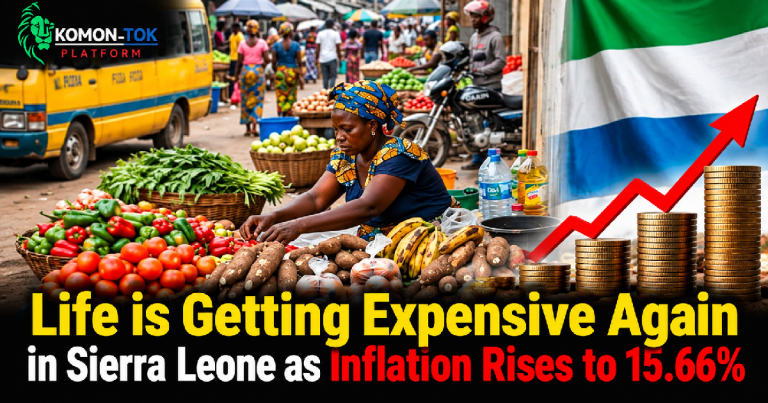
2. The Price Crisis He Didn’t Name: While Bio spoke about economic transformation, Sierra Leone’s inflation rose again to 15.66% in August. In the same week, the government confirmed fuel prices would increase, and then confirmed there was “enough fuel” after panic buying. Life is getting expensive again, the exact opposite of the industrial prosperity he promised at Harvard.
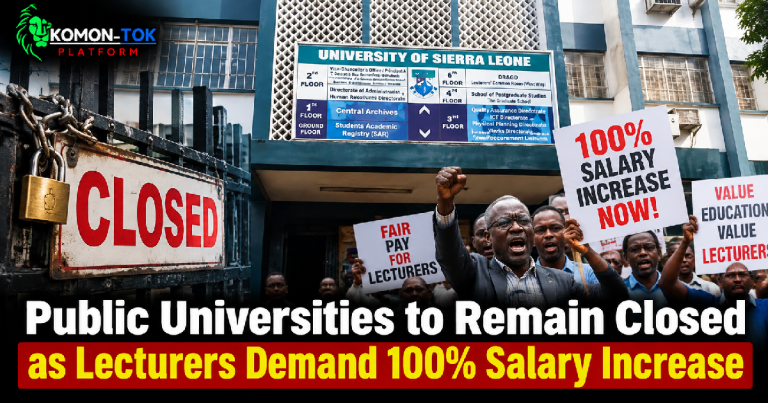
3. The Democratic Resilience Test: The Harvard theme was “democratic resilience.” At home, the Supreme Court has fixed a date for the disputed Constitution Bill, lecturers have begun a nationwide strike over pay, the SLFA has suspended its finance manager over Le1.3 billion unaccounted for, and the European Parliament is set to vote on actions against Sierra Leone over the Dutch fugitive “Bolle Jos.”
None of these domestic pressures featured in the Harvard address.
Why This Matters
Bio is not wrong. His four-question test is exactly what resource-rich countries need. Burkina Faso opened its first gold refinery this month for the same reason. Senegal demanded local processing. The world has taken Africa’s raw materials for too long.
But Sierra Leoneans have heard the trade-not-aid speech before in 2019 at the same Harvard Kennedy School. Seven years later, the country still exports raw diamonds and iron ore, and still imports almost everything it consumes.
Bio’s speech at Harvard send shockwaves because it tells superpowers to come with factories, not just promises. The real shockwave at home will come when Sierra Leoneans can ask the same four questions about their own government: Does this policy build our skills? Does it create our jobs? Does it lower our prices?
Until then, it remains a powerful speech delivered thousands of miles away from the people it is meant to help.