
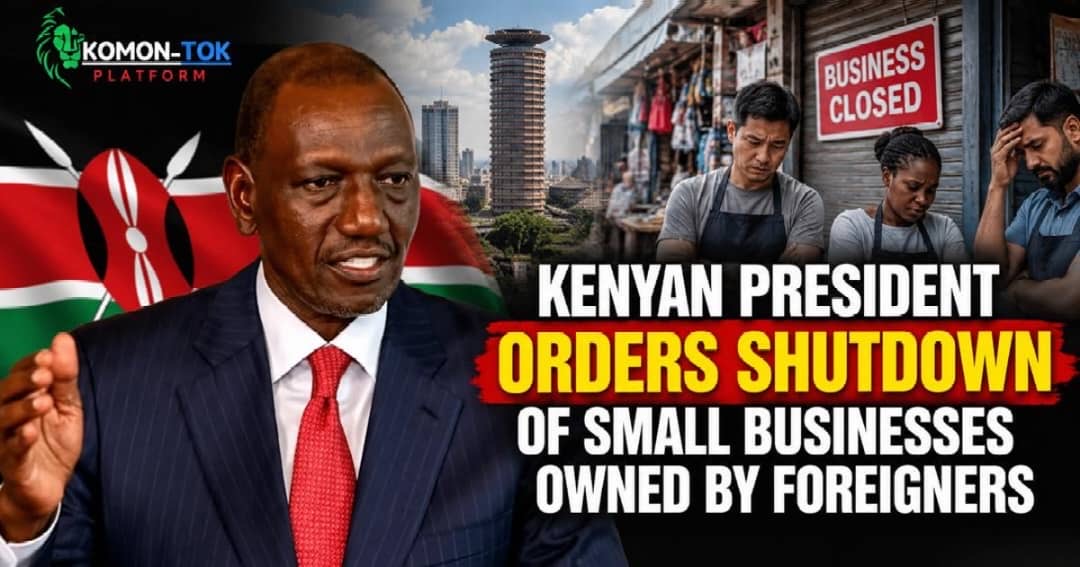
Kenyan President, William Ruto has directed authorities to begin closing small-scale businesses operated by foreign nationals starting Monday, 7 September, arguing that hawking and petty retail should be reserved for Kenyan citizens.
Speaking to micro, small and medium enterprise (MSME) traders at State House in Nairobi on Wednesday, Ruto said Kenya remains open to foreign investment but insisted foreigners should not compete with locals in low-capital activities.
“From next week, all traders doing those small businesses should close them,” he said. “We have made efforts to improve the economy; we have not improved investor confidence for hawkers to come to Kenya.”
He specifically criticised the idea of people arriving from China or elsewhere to work as hawkers or run small shops.
Ruto emphasised that foreign investors are welcome if they create jobs and expand production rather than undercutting Kenyan traders in the informal sector.
The directive comes amid long-standing complaints from Kenyan small traders, particularly in Nairobi, about competition from foreign nationals in hawking, retail and related informal activities. Many of those involved are African migrants, though Ruto also referenced Chinese traders. The exact number of foreign nationals operating such businesses is unclear.
Ruto linked the move to the Local Content Bill 2025, currently before Parliament. The proposed legislation aims to reserve certain economic activities for Kenyan citizens and impose local participation requirements on foreign firms, including that at least 80% of their workforce (including senior management) be Kenyan citizens and that they source a majority of goods and services locally.
Authorities have been instructed to start enforcement administratively next week, without waiting for the bill’s passage. Trade Cabinet Secretary Lee Kinyanjui and National Assembly Majority Leader Kimani Ichung’wah were among those tasked with advancing the measures.
The announcement has drawn support from some local traders while raising questions about enforcement, potential impacts on regional free-movement arrangements within the East African Community, and relations with neighbouring countries whose citizens work in Kenya’s informal economy.
Ruto, who is expected to seek re-election in 2027, framed the policy as protecting opportunities for ordinary Kenyans at the lower end of the economic pyramid.