
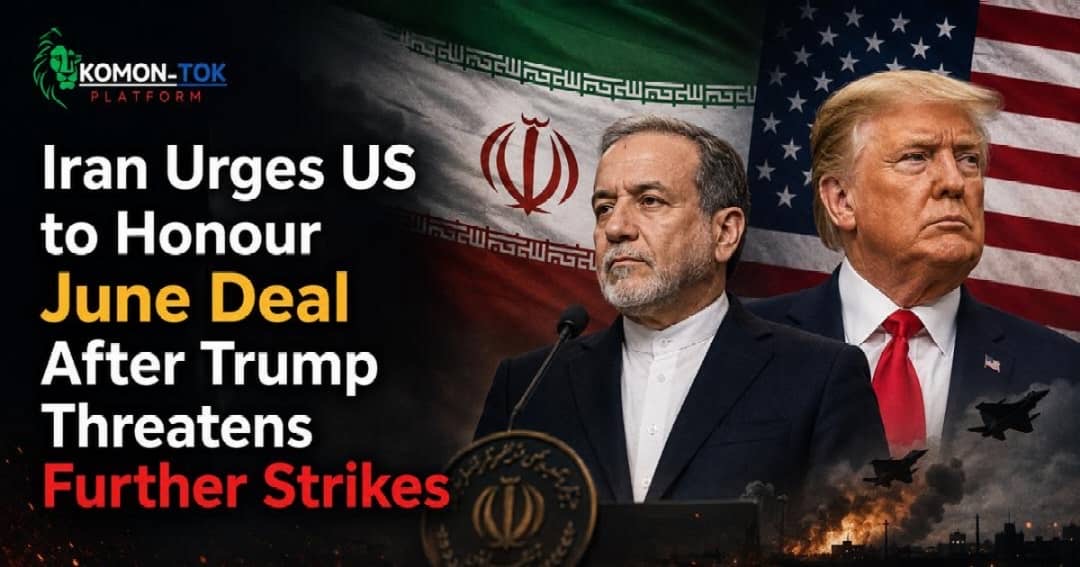
Iran said on Tuesday it would reciprocate if the United States honoured commitments under a June interim deal to halt hostilities, even as U.S. President Donald Trump threatened Tehran with further strikes.
The appeal came hours after the first exchange of direct attacks since late July, and following reports of two tankers coming under fire leaving the Strait of Hormuz, the critical oil supply waterway that Iran has effectively closed to shipping.
Calls to return to the agreement
A senior Iranian source told Reuters that the latest exchanges were a “limited and contained confrontation,” but warned that Tehran would deliver a harsh response if attacked again.
The June 17, 2026 memorandum of understanding, signed in Versailles, committed both sides to an “immediate and permanent termination of military operations on all fronts” and to reopen the Strait of Hormuz. The deal also gave negotiators 60 days to reach agreement on Iran’s nuclear program.
Iran now says it is ready to stick to the pact — if Washington does the same.
“We will reciprocate if the United States honours its commitments under the June interim deal,” the statement indicated, as officials urged a return to diplomacy rather than escalation.
Trump signals more strikes
Tensions rose after a U.S. attack on Iran’s Larak Island on Sunday. Iran responded overnight by launching missiles at two U.S. air bases in Jordan.
On Monday, Trump told Fox News “We’re going to hit them hard… There will be a response,” though he also told reporters the strikes did not signal a return to full-scale war.
On July 8, Trump had declared the interim agreement “over” following tit-for-tat attacks in the region. U.S. officials have since accused Tehran of treating the MOU as a “tactical pause” to prepare for escalation.
Oil prices climb as Hormuz comes under threat
Markets reacted sharply. Oil prices rose after the attacks and after two UAE tankers were hit by Iranian cruise missiles in Omani waters, killing one crew member. Shipping data showed tanker transits through the Strait fell to a two-month low.
The Strait of Hormuz carries about 20% of the world’s oil, roughly 20 million barrels a day. The U.S. has reinstated a naval blockade of Iranian shipping, and Iran has told the International Maritime Organization it asserts authority over portions of the waterway.
Brent crude hit its highest level since the June 17 deal was signed.
Risk of wider war
While neither side appears to want all-out war, their pledges to respond to further attacks highlight how quickly the conflict — increasingly fought through sanctions, blockades and economic pressure — could spill back into military action.
Trump said on August 26 he was “not in a hurry” for negotiations to resume. Vice President JD Vance said on August 20 the U.S. would move into a new phase of the war focused on economic pressure.
Analysts say the coming days will test whether the June deal can be salvaged, or whether the Gulf faces another cycle of retaliation.