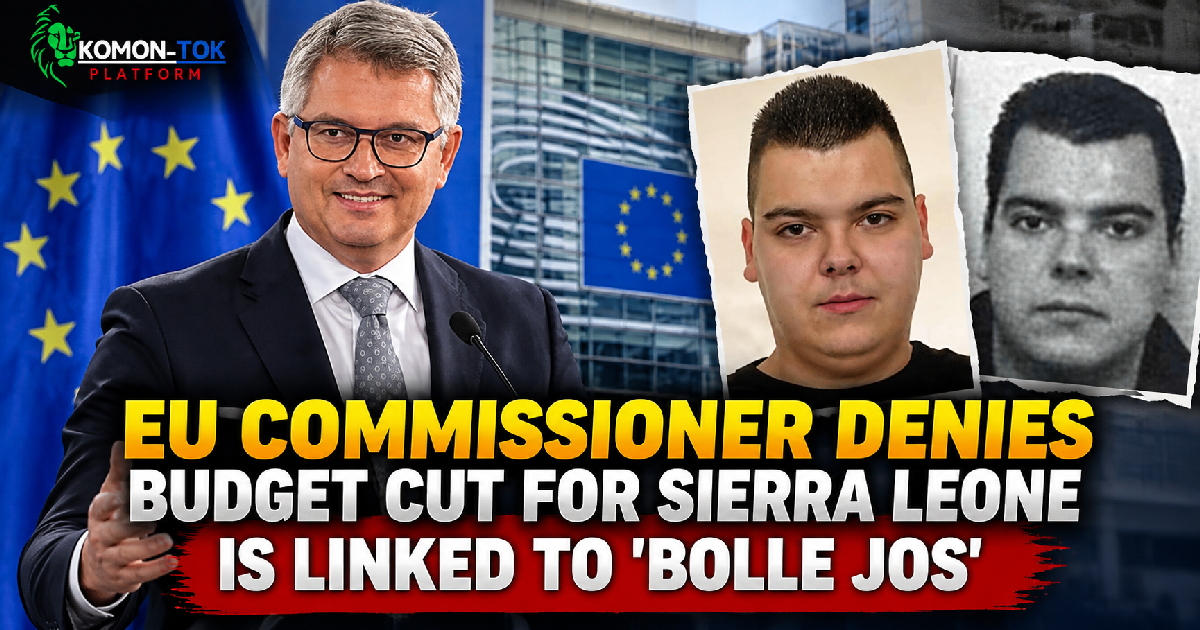
The European Union has distanced itself from claims that it cut budget support to Sierra Leone because the country is harbouring Dutch drug fugitive Jos Leijdekkers.
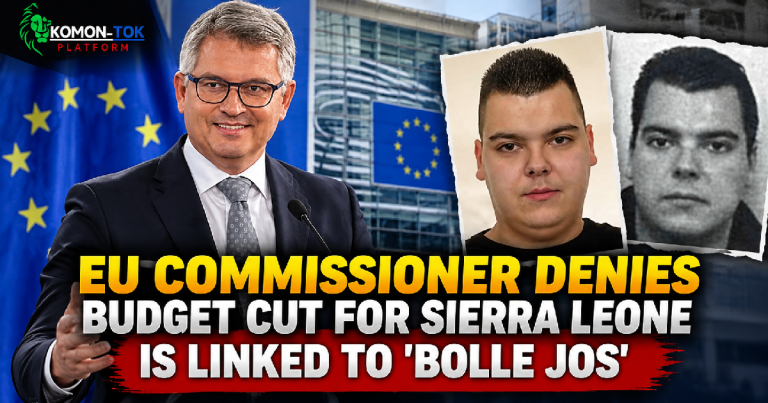
Speaking in Luxembourg on Thursday after a meeting of EU Justice and Home Affairs Ministers, the EU Commissioner for Internal Affairs and Migration, Magnus Brunner, said while Brussels is worried about drug trafficking trends in Sierra Leone, the decision to postpone financial assistance was not punishment for the Leijdekkers case.
“What we need is action against third countries that harbour drug traffickers,” Brunner told reporters. “We are concerned as a European Union about drug trafficking and transnational crime and organized crime trends in Sierra Leone.”
But he drew a clear line on the money issue.
“When it comes to the suspension of the support, that’s due to technical reasons,” he said.
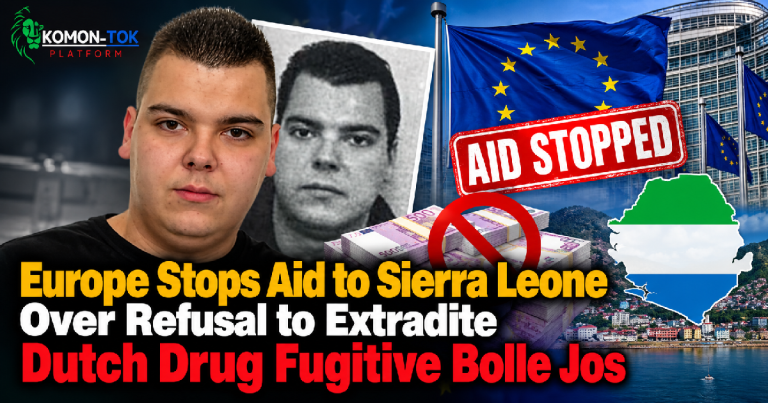
His clarification directly contradicts what the Dutch Justice Minister, David van Weel, had suggested earlier in the week. Van Weel had reportedly told EU colleagues that EU aid was being frozen because Freetown was providing refuge to Leijdekkers, one of Europe’s most wanted men, convicted in the Netherlands for large-scale cocaine trafficking and nicknamed “Bolle Jos”.
Van Weel did not address the press after the Luxembourg meeting, and his office has not given further clarification.
The Luxembourg talks focused on migration, the new EU Drug Strategy, and security challenges. Sierra Leone came up because the Netherlands has been lobbying for tougher EU action.
A Dutch diplomat who was in the room, speaking anonymously to reporters, insisted that the Leijdekkers issue is still a major concern for The Hague. The diplomat said Minister van Weel will push to fast-track a new EU sanctions regime against cross-border organised crime networks, unveiled by the European Commission in July, which targets migrant smuggling, human trafficking, firearms, drug trafficking and money laundering.
“Organised crime networks operating across borders can be very effective being based in a third country where local authorities might be unwilling to cooperate or extradite them,” the diplomat said.
That proposal is still being debated.
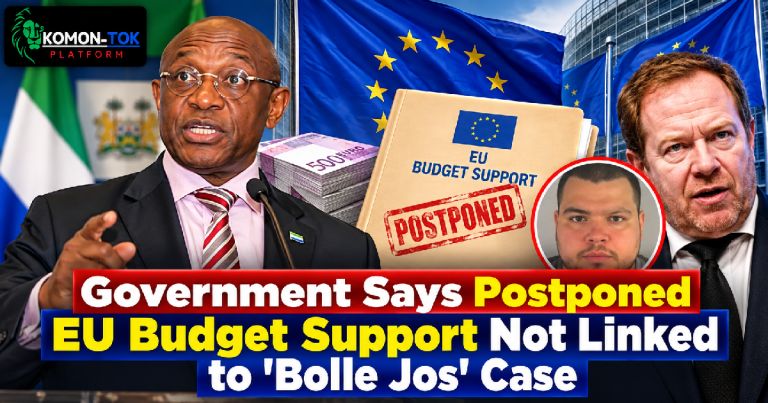
Brunner’s statement backs what the Government of Sierra Leone said on Wednesday. In a press release, the Ministry of Information said the EU formally informed Freetown in July that the 2026 disbursement was being postponed because of “the timing of Sierra Leone’s request for an amendment to the Financing Agreement,” which made it difficult to complete the required processes within the reporting cycle.
Government said the EU proposed to reschedule the 2026 and 2027 payments to 2027 and 2028, and that EU representatives had made it clear the decision “was not taken as a consequence of discussions concerning any particular individual.”
In Freetown, news that vital EU budget support — money that goes directly into the national budget for service delivery, public financial management and governance reforms, could be suspended triggered alarm.
Anti-corruption campaigner Abdul Fatoma warned against collective punishment.
“Justice and accountability for transnational crimes are non-negotiable, but they must be pursued through strengthened partnership and rule of law, not by withdrawing support from the people of Sierra Leone,” Fatoma said.
Brunner’s remarks will bring some relief to the government, suggesting that while the EU remains concerned about organised crime and the unresolved Leijdekkers controversy, the current aid hold-up is procedural and not a direct sanction against Sierra Leone.