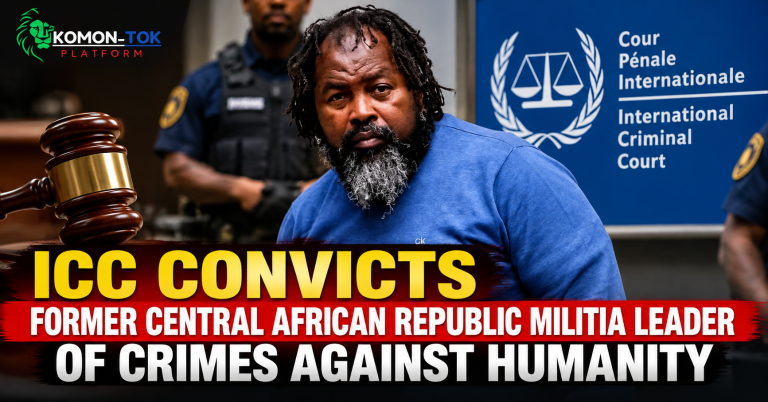
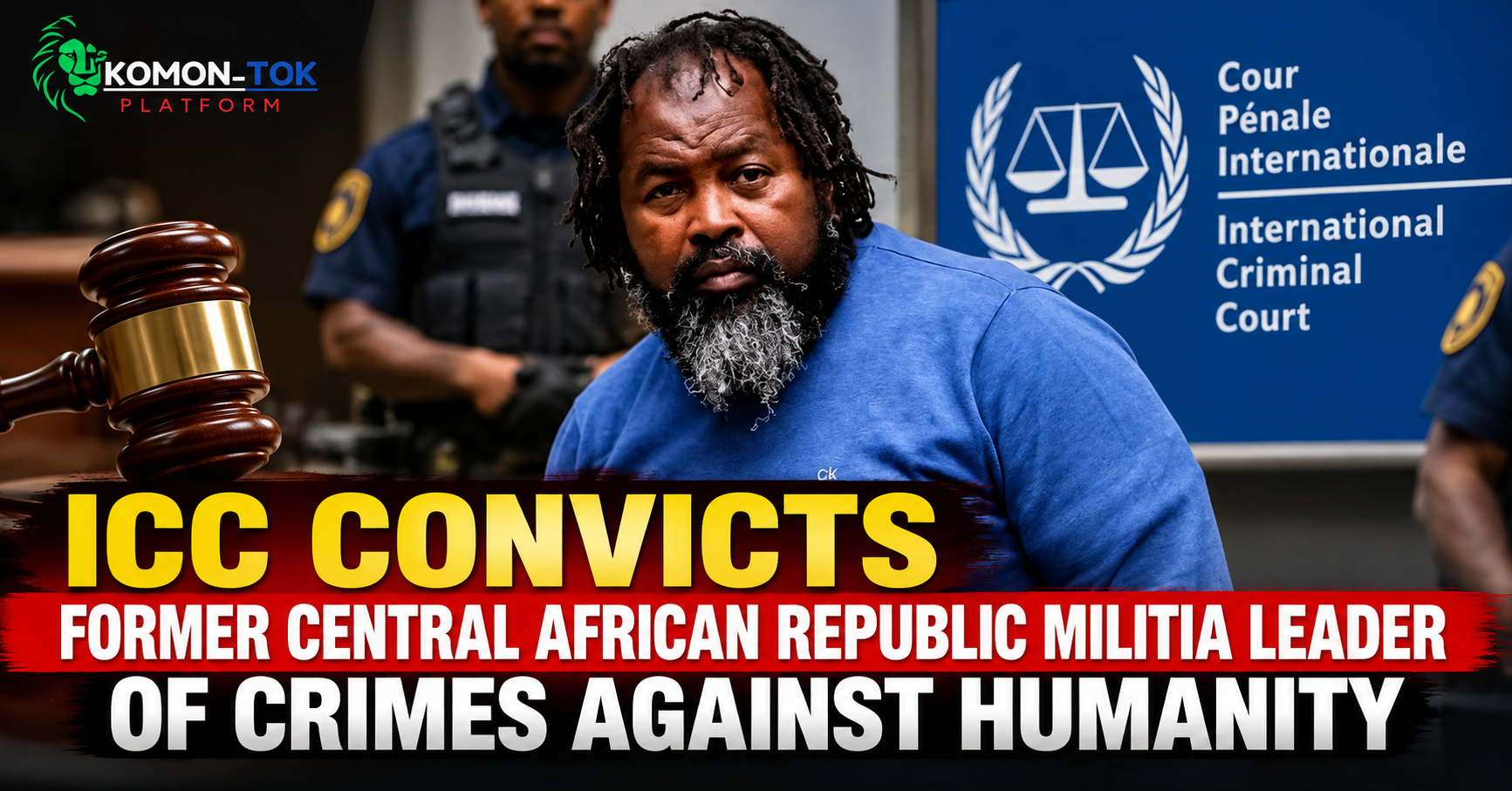
The International Criminal Court (ICC) on Wednesday convicted former Central African Republic militia commander Mahamat Said Abdel Kani of crimes against humanity, including torture, over his role in running a notorious detention centre during the 2013 civil war.
Judges in The Hague found Said, 56, guilty of overseeing systematic abuse at the Central Office for the Repression of Banditry (OCRB) in Bangui, where supporters of then-President Francois Bozize were rounded up after the Seleka rebel coalition seized power.
Presiding Judge Miatta Maria Samba – a Sierra Leonean jurist – said detainees were whipped, waterboarded and bound using a method known as “Arbatacher”, in which hands, elbows and feet are tied together behind the back. Some were held for weeks in overcrowded underground cells without toilets or showers.
“The floor was covered in waste, and it smelled of faeces and urine,” Samba said as she delivered the verdict.
The court heard testimony that victims suffered lasting trauma. One survivor said his life had been destroyed by the mistreatment.
Said, who denied all charges, appeared in court in jeans and a blue sweatshirt, shaking his head as the verdict was read. He was acquitted of three war crimes charges after judges ruled that an armed conflict no longer existed at the time of some of the alleged acts, meaning they could not be classified as war crimes under the Rome Statute.
His sentence will be determined at a later hearing. He faces up to 30 years in prison.
Said was a senior figure in the Seleka coalition, a predominantly Muslim alliance that ousted Bozize in March 2013, plunging the majority-Christian nation into sectarian violence that killed thousands and displaced more than a million. He was surrendered to the ICC in January 2021.
The conviction is the ICC’s second relating to the Central African Republic conflict, after the court sentenced Anti-Balaka militia leaders Alfred Yekatom and Patrice-Edouard Ngaissona in July.
Central African Republic remains one of the world’s poorest countries and is still under an ICC investigation opened in 2014.
About The Author