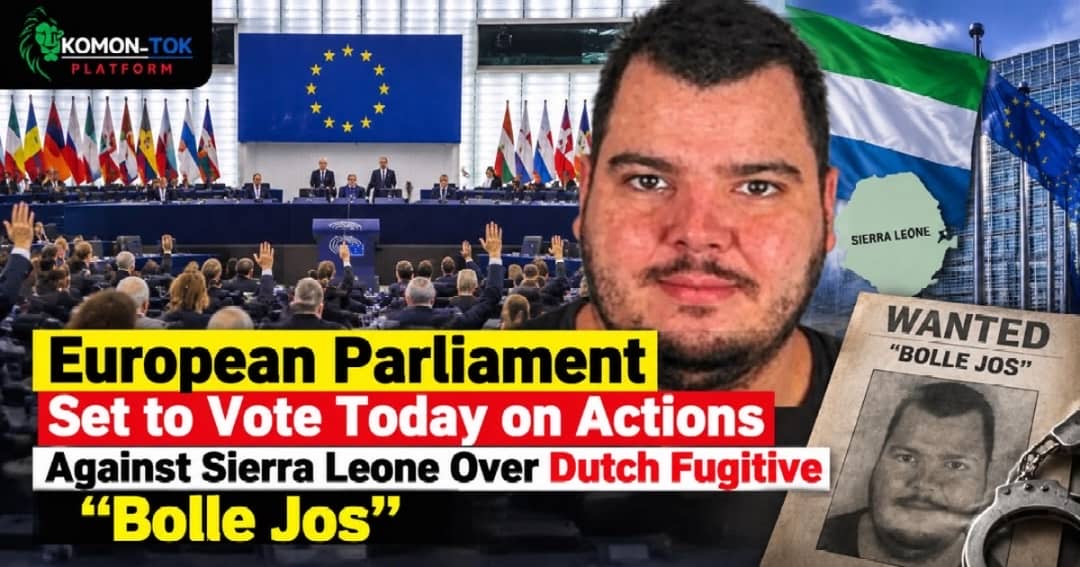
Today, Thursday 17 September 2026, the European Parliament is expected to vote on a resolution calling for tougher pressure on Sierra Leone over the case of Dutch national Jos Leijdekkers, better known as “Bolle Jos.”
The resolution wants stronger cooperation with West African countries on legal matters. It also urges the European Union to look at possible diplomatic and financial steps, including cutting or restricting development aid and placing visa restrictions on senior officials.
Dutch MEP Malik Azmani has been one of the loudest voices pushing for this, previously calling on the European Commission to take stronger action to get Leijdekkers extradited.
Leijdekkers has been convicted in his absence in both the Netherlands and Belgium on serious drug-trafficking and related charges. European authorities still want him.
Dutch and EU officials have repeatedly asked Sierra Leone to help hand him over. Sierra Leonean authorities say they do not know where he is and have rejected claims that the country is protecting him.
The European Commission has set aside €352 million in grants for Sierra Leone covering 2021 to 2027. The money supports projects in sustainable energy, food systems and biodiversity. That funding has not been stopped. Any decision to suspend it would need further approval from EU institutions. A parliamentary resolution would increase political pressure but would not automatically cut aid or impose sanctions.
Tensions have grown in recent months. In June, Dutch Justice Minister David van Weel publicly called on the EU to stop development support, arguing that a country said to be hosting one of Europe’s most-wanted criminals should not receive European taxpayers’ money. Sierra Leone’s Chief Minister, Dr David Moinina Sengeh, hit back hard. He called the threats “scandalous” and “neo-colonialism.” After a television interview in which Van Weel appeared, Sengeh said Sierra Leone is an independent nation that “does not live on European money.”
He repeated that the country’s security services have no information on Leijdekkers’ location and challenged the Dutch to produce clear evidence if they claim otherwise.
The case has drawn attention because of earlier reports and videos linking Leijdekkers to events in Sierra Leone, including a church service attended by President Julius Maada Bio. Claims of personal ties to members of the presidential family have appeared in international media, but Sierra Leonean officials have dismissed them as unproven. There is also no extradition treaty between Sierra Leone and the Netherlands, which has made formal processes more difficult.
For many Sierra Leoneans, this raises questions about the country’s independence, the strings that sometimes come with development partnerships, and the risk that ordinary people could feel the effects of a dispute over one foreign national. Government statements have stressed willingness to work with other countries against cross-border crime while rejecting outside pressure that appears to challenge Sierra Leone’s sovereignty.
About The Author