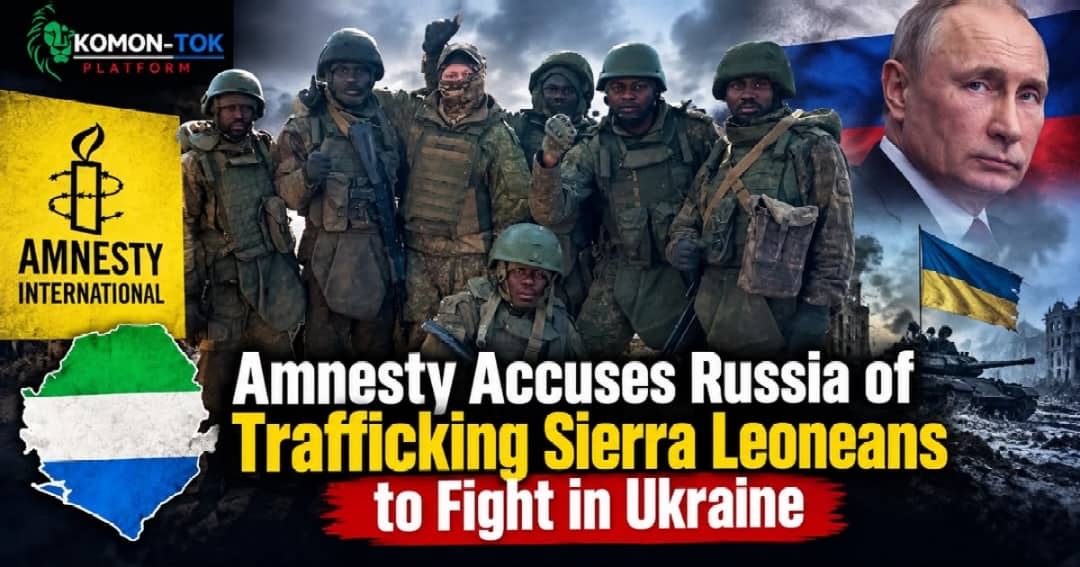
Amnesty International has accused Russia of tricking foreigners, including Sierra Leoneans, into joining its army to fight in Ukraine.
In a report released on 10 September 2026, the human rights group says Russian recruiters target people from poorer countries who are struggling financially. They offer fake jobs in security, logistics, construction, IT or similar work, with promises of good pay and quick Russian citizenship.
Once people arrive in Russia, or if they are already there their passports and phones are often taken away. They are forced to sign papers they cannot understand, given only a short training of about two weeks, and sent to the front lines. Anyone who tries to leave faces threats.
Amnesty spoke to prisoners of war from several countries, including Sierra Leone, Brazil, Colombia, Cuba, Egypt, Somalia, South Africa and Sri Lanka, who were held in Ukrainian camps between 2024 and 2026. They also heard from people still serving with Russian forces, their families, lawyers and activists. Sierra Leoneans among those interviewed said they were promised ordinary civilian jobs but ended up pushed into military service as soon as they arrived.
This matches earlier stories of individual Sierra Leoneans. One man who had already served more than ten years in the Sierra Leone army went to Russia looking for better-paid civilian work to support his family. Instead he was taken to a military base, given brief training and sent into combat before being captured. Similar accounts involve other Africans offered security or driving jobs.
Ukraine says that by April 2026 it had identified more than 28,000 foreigners from 136 countries who had fought in the Russian army (not counting regular North Korean units). Amnesty said it could not check that total itself. Russia has not given any public response to the Amnesty report so far.
Amnesty’s Secretary General Agnès Callamard said Russia is using these foreign nationals as “cannon fodder” and that in many cases it amounts to human trafficking.
The group called on Russia to stop these methods. It also urged countries whose citizens are affected to warn people clearly, protect them, and go after the recruiters and middlemen.
Sierra Leone still has diplomatic ties with Russia, and Moscow has previously thanked Freetown for its balanced position on the war. There has been no official statement yet from the Sierra Leone government on the latest Amnesty findings.
About The Author