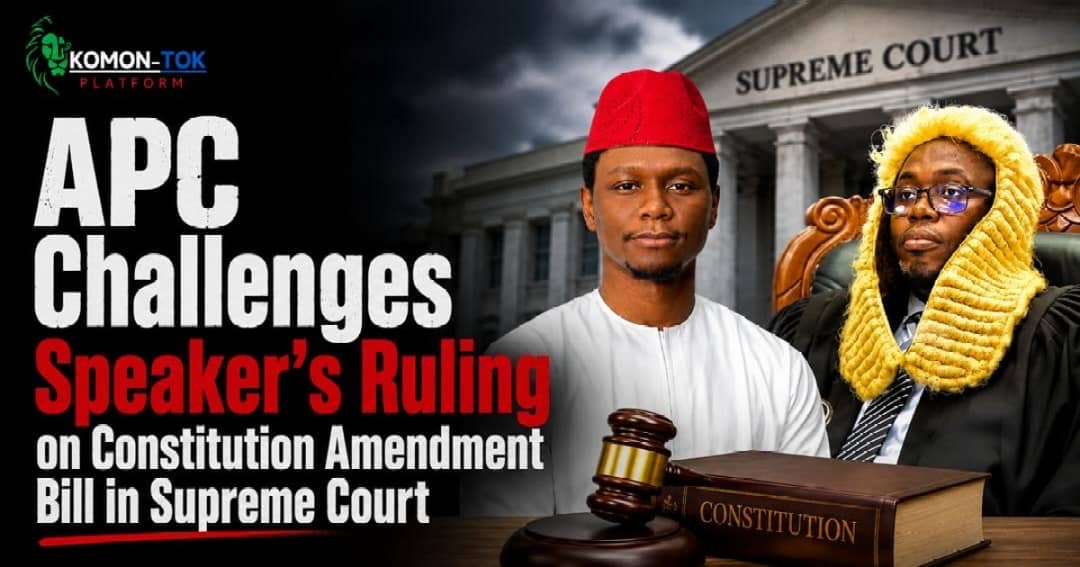
The main opposition, All People’s Congress (APC) legal team has gone to the Supreme Court to challenge the Speaker’s decision of 10 August 2026 that allowed the Constitution of Sierra Leone (Amendment) Bill, 2025 to pass.
The case is being brought for Hon. Osman Abdal Timbo, Member of Parliament. Hon. Abdul Kargbo MP and Hon. Daniel Koroma MP are named as parties on the APC side. The respondents are the Speaker of Parliament, the Attorney-General, and the Clerk of Parliament.
Lawyer Joseph Fitzgerald Kamara, speaking for the party, said the case raises serious questions about how the 1991 Constitution must be followed. The key issues are the rules on publishing any bill that changes the Constitution and the two-thirds majority needed to pass it.
Kamara said these rules exist for a reason. They protect the Constitution from being changed too quickly or without proper support.
“This is not about politics,” he said. “It is about principle. Parliament, the government, and everyone else must stay within the Constitution. No one is above it — not the President, not the Speaker, not the Attorney-General, and not Parliament itself.”
He praised Hon. Timbo for taking the matter to court and said the MP is putting his faith in the Supreme Court to give a clear ruling that protects the country’s constitutional order.
Kamara urged Sierra Leoneans to follow the case closely.
The outcome will decide the future of the 2025 Amendment Bill and set the standard for how the Constitution can be changed in the years ahead.
“We are a nation of laws, not of men,” Kamara said. “The Constitution must prevail.”
The dispute stems from the parliamentary sitting on 10 August 2026. After opposition MPs walked out, the Speaker ruled that the Bill could pass with the votes of those present, applying the ordinary majority rule rather than the special two-thirds requirement for constitutional changes. The Speaker also referred the threshold question to the Supreme Court. Legal voices, including lawyer Melron Nicol-Wilson, have argued the process was invalid and that the purported passage has no legal effect.