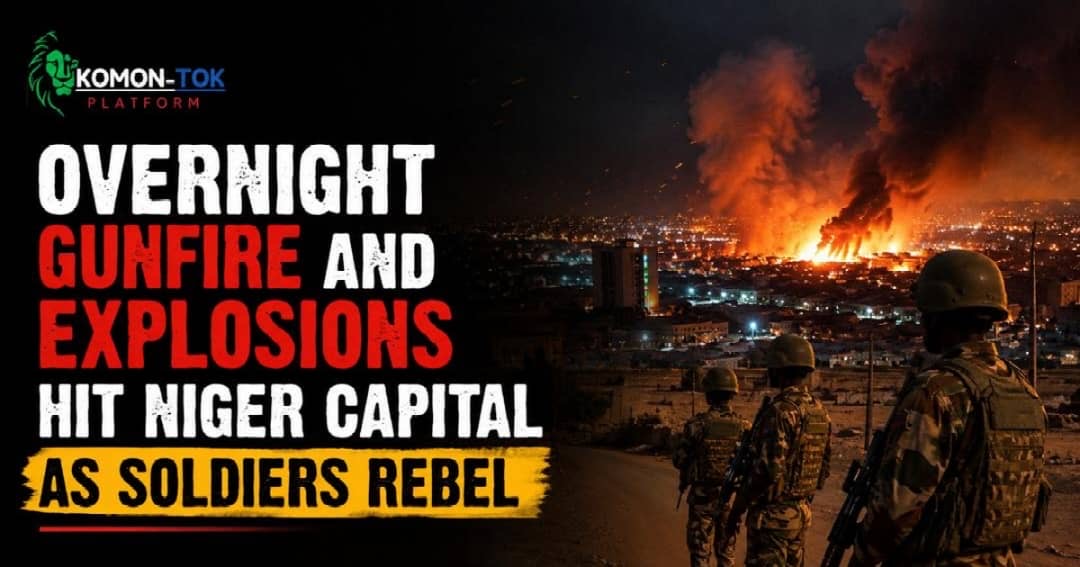
Soldiers in Niger turned on their officers overnight, taking some hostage at a key air base and firing on sensitive sites in the capital, authorities said Saturday. Heavy gunfire and explosions shook the city for hours.
The trouble started around 1 a.m. at Base 101, the military airfield next to Diori Hamani International Airport.
Shooting also rang out in the Plateau district, home to the presidential palace and other government buildings. Residents reported sustained bursts of fire and blasts that continued into the morning. Many stayed indoors. Security forces sealed off the airport area and a main road into the city. State television went off the air for a time before coming back.
Defense Minister Gen. Salifou Mody said a group of soldiers broke military rules, held some of their comrades at the base, and fired on important locations.
Forces responded quickly and “gradually regained control” of the sites, he said. He urged people to stay calm and go about their normal routines.
A local lawmaker called it a “cowardly attack” and said the situation was under control. The ruling military council posted a call for unity, saying the defense forces were mobilized to protect the country.
Some reports indicated fighting continued near the palace for a while, with the presidential guard pushing back attempts to enter.
Sources also said soldiers from towns southwest of the capital may have joined in. By late morning, officials described the situation as largely contained, though details remained limited and no full casualty figures were released.
This is the third security incident this year at the airport base. Jihadist groups hit it twice earlier in January and June. The facility is important as it holds Niger’s air force assets and serves as headquarters for a joint military force with Burkina Faso and Mali.
The unrest adds pressure on the military government led by Gen. Abdourahamane Tchiani, who took power in a 2023 coup. Since then, Niger has cut ties with traditional Western partners and drawn closer to Russia. Jihadist violence linked to al-Qaida and Islamic State groups continues across the Sahel region, and the economy has suffered from reduced aid.