
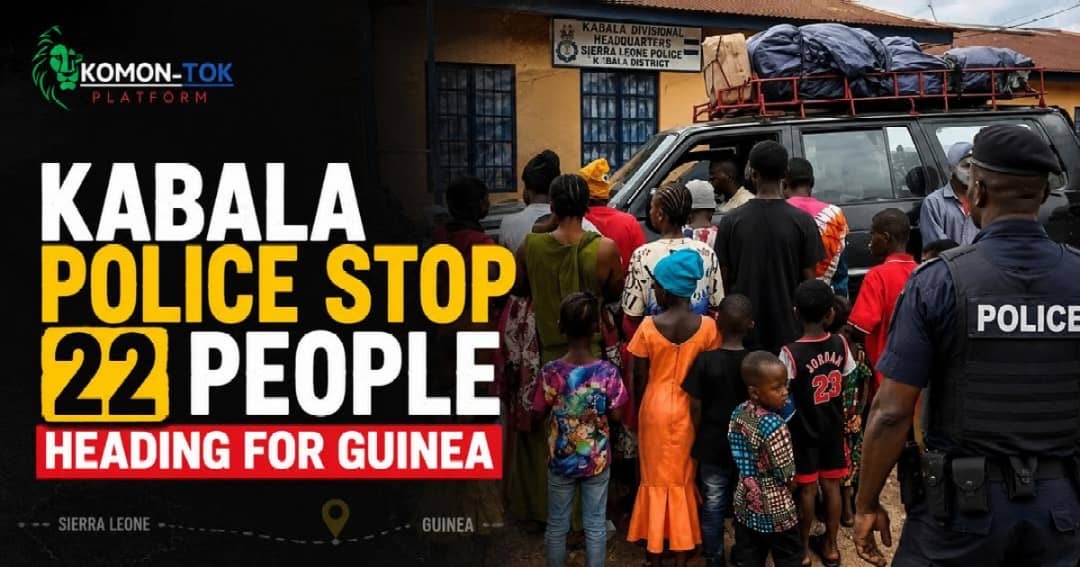
Police in Kabala have stopped a group of 22 people who were trying to cross into Guinea.
The interception happened on Sunday, 30 August 2026, at Gbinndi Park in Kabala Town. Among them were 12 children – five boys and seven girls – and 10 adults, made up of one man and nine women.
All 22 are now in police custody. Officers are still looking into why they were heading to Guinea and why so many children were with them.
People from the Civil Society Unit, including Madam Mankie and Steaven Gebrila Mamaya, were there during the operation. This information comes from Radio Shalom’s Court and Human Rights Reporter, Jennifer P. Mansaray.
Police have not yet given names or more details about the group’s plans.
Kabala, the main town in Koinadugu District, sits close to the Guinea border. Police in the area have stopped similar groups before. In April this year, they intercepted 21 people, including a four-month-old baby, who were also suspected of trying to leave the country through irregular means, with links to possible human trafficking. Those people were said to be on their way toward Niger.
This latest case comes as the government continues to warn people about irregular travel through Guinea. On 20 August, the Ministry of Information and Civic Education made it clear that Sierra Leoneans with proper travel documents can still go to or pass through Guinea for genuine reasons. But anyone trying to use Guinea as a route for migration or overseas jobs outside the proper channels is not allowed.
Guinean authorities have also raised worries about irregular movement, suspected trafficking, and unverified job offers. Sierra Leonean officials are urging people who want to work abroad to check everything first with the Ministry of Employment, Labour and Social Security and to avoid illegal routes. These routes put travellers, especially women and children at high risk of exploitation and trafficking.
Human trafficking is against the law in Sierra Leone. Police are still investigating the group stopped at Gbinndi Park and have not said whether organised networks were involved.