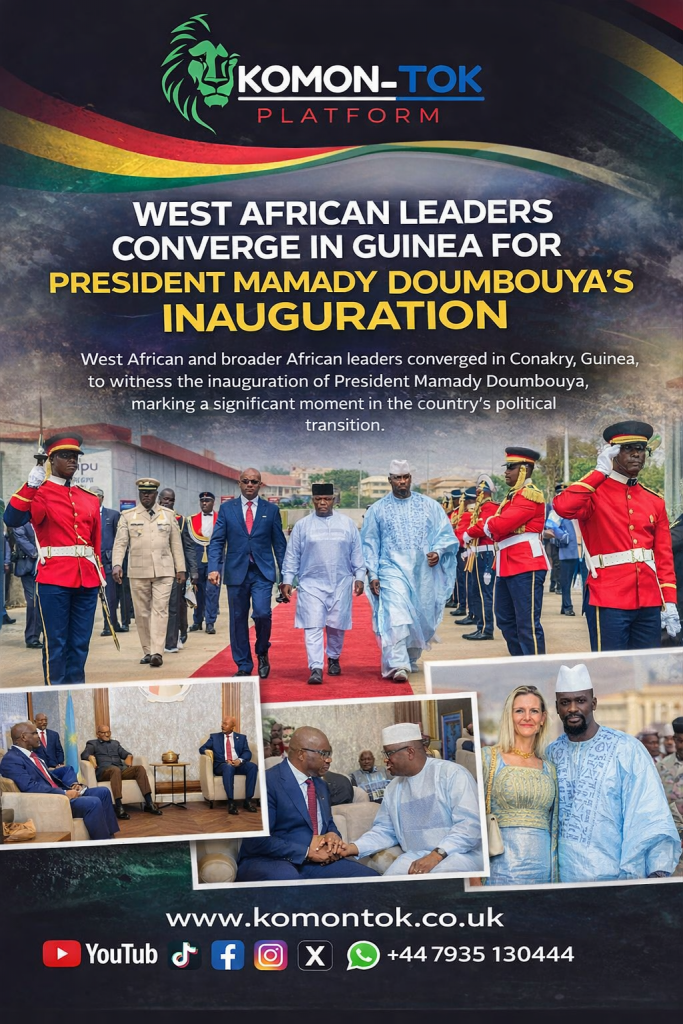
The recent convergence of West African and broader African leaders in Conakry for the inauguration of Mamady Doumbouya forces a hard and uncomfortable question: how sincere is ECOWAS in its professed commitment to democracy?
For years, ECOWAS has presented itself as the custodian of constitutional order in West Africa—issuing communiqués, imposing sanctions, and invoking democratic norms. Yet its actions increasingly contradict its rhetoric. The ceremony in Conakry, attended by high-level regional figures, symbolised not democratic restoration but the quiet normalization of military power repackaged as civilian rule.
Guinea’s transition exposes a troubling pattern: the erosion of supremacy of civilian authority. While uniforms may have been replaced by suits, the underlying power structure remains military. Elections are deferred, constitutional timelines stretched, and transitional charters rewritten to suit incumbents who emerged from coups. This is not democratic consolidation; it is civilian government in military disguise.
ECOWAS appears willing to tolerate this reality so long as surface-level stability is maintained. The bloc’s selective enforcement—harsh in some cases, lenient in others—undermines its credibility and raises suspicions of political convenience over principle. When juntas are gradually legitimised through diplomatic recognition and ceremonial endorsements, the message to the region is clear: seize power first, negotiate democracy later.
The danger is profound. Citizens across Guinea and the wider region are watching. If military takeovers can be sanitised through prolonged transitions and symbolic civilianisation, constitutional order becomes optional rather than obligatory.
Until ECOWAS draws a firm, consistent line—one that prioritises genuine civilian supremacy, credible elections, and enforceable timelines—its commitment to democracy will remain in doubt, and its moral authority will continue to erode.
The contradiction deepens under Julius Maada Bio, ECOWAS Chairman, tasked with defending democratic principles. A former junta leader himself, long criticised for human rights violations and opposition suppression, his leadership weakens ECOWAS’s moral authority and reinforces doubts about the bloc’s sincerity in upholding constitutional democracy.
About The Author