Uganda Election: Museveni Secures Seventh Term Amid Controversy
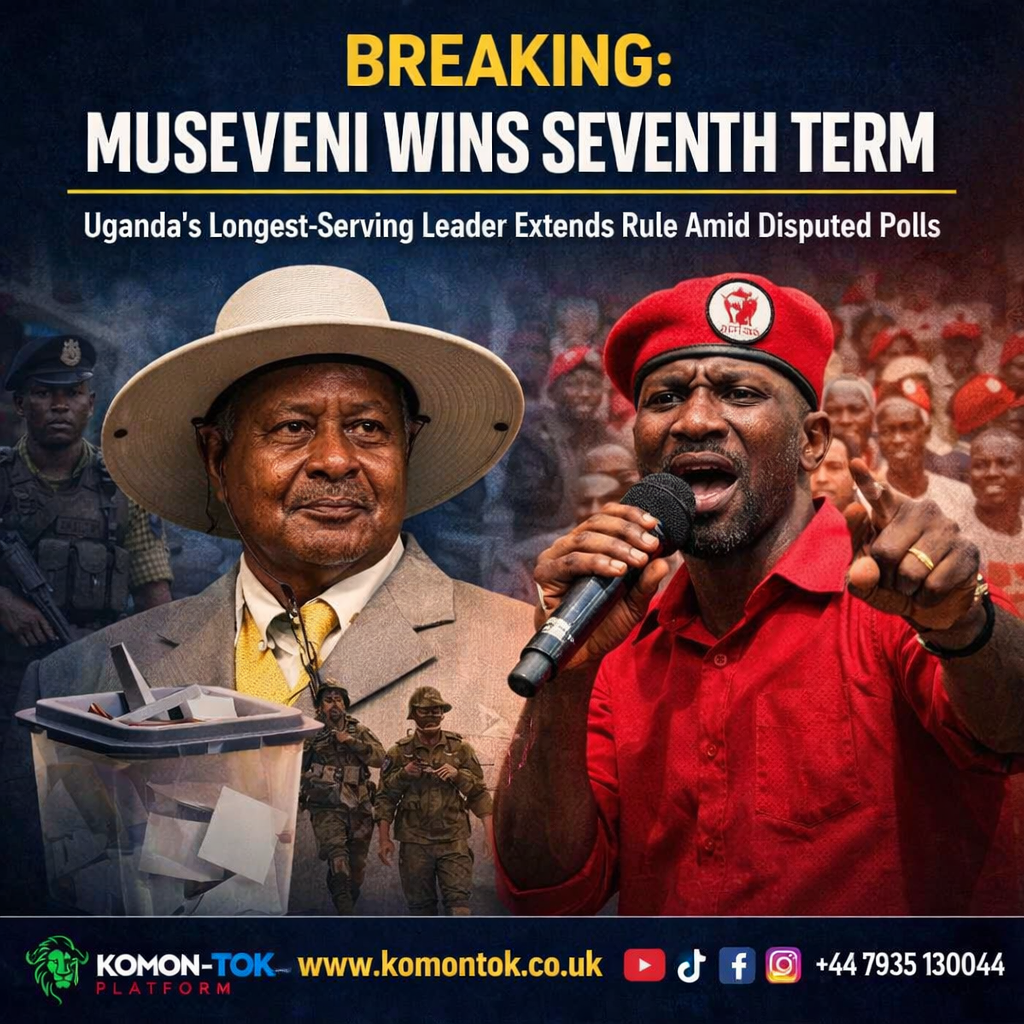
Yoweri Museveni has been declared the winner of Uganda’s presidential election, securing a seventh five-year term and extending his rule toward half a century since taking power in 1986 as a guerrilla leader. According to official results released by the Electoral Commission, Museveni obtained approximately 71.6 percent of the vote. His main challenger, opposition leader Robert Kyagulanyi, popularly known as Bobi Wine, received about 24.7 percent.
The election was conducted under a cloud of controversy, marked by internet shutdowns, biometric voting machine failures, and a heavy security presence across the country. Opposition figures raised concerns over transparency and fairness, with Bobi Wine rejecting the outcome and describing the process as deeply flawed. He also confirmed leaving his residence amid heightened security restrictions.
1. Outcome of the Election
• Long-time president Yoweri Museveni was declared the winner of Uganda’s presidential election, securing a seventh term in office with around 71–76 percent of the vote according to official tallies.
• His principal challenger, Robert Kyagulanyi Ssentamu (“Bobi Wine”), received about 24–25 percent, and rejected the result as fraudulent.
2. Background and Significance
• Museveni, 81 years old and in power since 1986, originally came to power as a guerrilla leader and has remained dominant for nearly four decades.
• The election was widely seen as another test of his political strength and the durability of his rule, amid accusations that he has used state power to marginalize opponents and extend his time in office by abolishing constitutional term and age limits.
3. Allegations of Irregularities and Suppression
• The campaign and voting process were marred by controversy and claims of unfair practices:
- A nationwide internet shutdown was imposed shortly before the vote, ostensibly to curb misinformation — but critics argued it suppressed communication and transparency.
- Opposition figures and activists reported harassment, arrests, and violence by security forces during campaigning.
- Technical glitches, especially failure of biometric voter machines, caused delays and forced manual voting in many areas.
- Bobi Wine and his party asserted that security forces effectively placed him under house arrest or raided his home after the vote; authorities denied or characterized these actions differently.
4. Post-Election Tensions and Violence
• Following the election, clashes and unrest were reported in parts of the country, with at least seven or more people killed in confrontations between security forces and opposition supporters.
• Opposition protests and related arrests occurred as tensions continued over the legitimacy of the results and claims of repression.
5. Domestic and International Reaction
• Bobi Wine publicly rejected the official results, labelled them “fake,” and called for peaceful protest and verification of votes.
• Human rights groups and the United Nations criticized the electoral environment as one of repression and intimidation, indicating concerns about the fairness and credibility of the process.
6. Broader Context
• Uganda has not experienced a peaceful transfer of presidential power since independence.
• Museveni’s extended rule and treatment of opposition are part of longstanding criticisms from local and international observers who argue that democratic norms have been weakened in Uganda.
Despite sustained domestic and international scrutiny, the declaration consolidates Museveni’s grip on power and underscores ongoing debates about democratic governance and electoral credibility in Uganda.