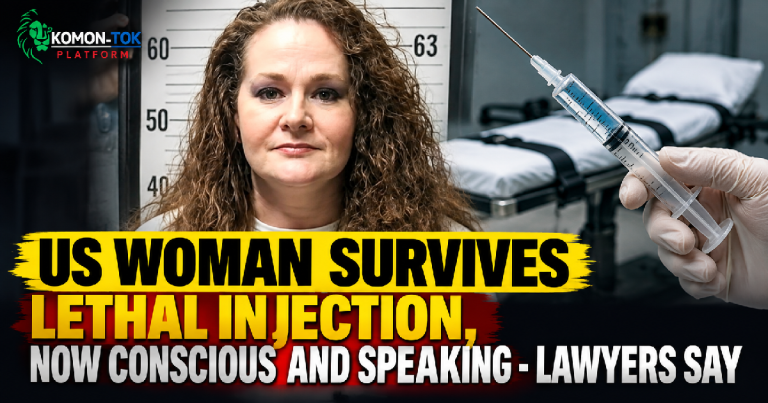
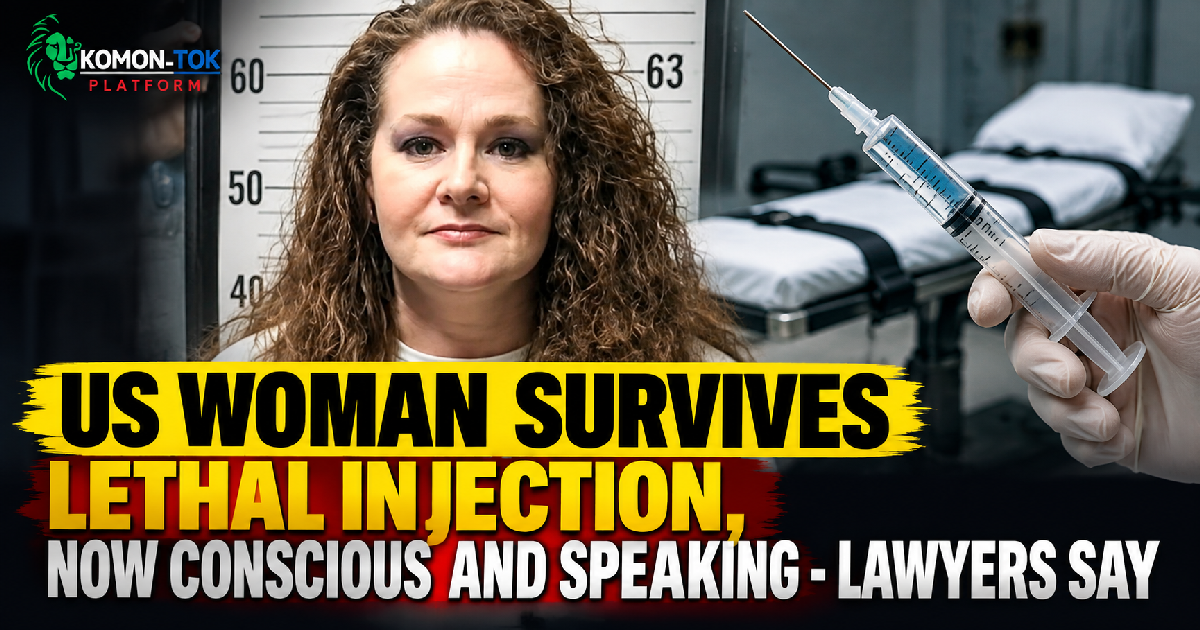
Convicted killer Christa Pike, who survived Tennessee’s attempt to execute her last week, is now conscious and speaking in hospital, in what her lawyers call a medically unprecedented recovery.
Pike, 50, was taken to hospital on September 30 after execution staff at Riverbend Maximum Security Institution in Nashville failed to kill her despite administering two full doses of pentobarbital, the state’s single-drug lethal injection chemical.
On October 6, her legal team said she had regained consciousness after spending days unconscious and on a ventilator.
“Against all odds, Christa Pike is conscious, speaking and continues to receive critical medical care,” attorneys Randy Spivey and Kelly Gleason from the Tennessee Office of the Post Conviction Defender, and Stephen Ferrell and Luke Ihnen from Federal Defender Services said in a joint statement.
“Her recovery is medically unprecedented. Her prognosis remains unclear but, at a minimum, we expect a long recovery.”
Her lawyers said she remains handcuffed and shackled to her hospital bed despite suffering severe injuries to both arms. They described her arms as swollen, burned and blistered after execution technicians struggled for more than an hour to establish intravenous lines, using at least seven needles.
The lawyers argue the IV lines were improperly placed or her veins blew, causing the drug to enter surrounding tissue rather than her bloodstream. They said they had warned the state beforehand that Pike had small veins and thrombocytosis, a blood condition that makes IV access difficult.
The Tennessee Department of Correction has said officials followed the state’s protocol and that the drug used has consistently been effective. It has not explained why the execution failed.
According to media witnesses, the curtain to the death chamber was raised at 7:27 p.m. on September 30. Pike, already strapped to a gurney, said “I’m ready to be free… this is a happy day” and sang with her spiritual advisor. After the first dose, at 7:34 p.m., she said her arm felt like it was about to burst and was heard moaning, breathing heavily and snoring. The curtain was closed and reopened, and at 8:53 p.m. witnesses were removed. Ambulances arrived at 9:14 p.m.
Pike’s case is historic. According to the Death Penalty Information Center, no one in the U.S. had previously survived the administration of lethal injection drugs. She was also set to be the first woman executed in Tennessee in more than 200 years.
The fallout has been swift. Tennessee Commissioner of Corrections Frank Strada, who oversaw the execution, resigned on October 3. Governor Bill Lee ordered a comprehensive, third-party review led by former U.S. Attorney Ed Stanton and postponed Tennessee’s only other scheduled execution for 2026. Stanton had previously led a 2022 review that found the state had not followed its own lethal injection protocol.
A court hearing is scheduled for 11 a.m. Wednesday October 7 in Davidson County Chancery Court, where Pike’s lawyers are asking Chancellor I’Ashea Myles to order the state to preserve all evidence from the failed attempt, including drug lot numbers and execution logs. They argue the failed execution violated the constitutional ban on cruel and unusual punishment and are renewing calls for Governor Lee to commute Pike’s sentence to life without parole.
Pike was sentenced to death for the 1995 murder of Colleen Slemmer, 19, a fellow student at the Job Corps training center in Knoxville. Prosecutors said Pike, then 18, and her 17-year-old boyfriend Tadaryl Shipp lured Slemmer into woods and tortured her out of jealousy. Pike cut Slemmer’s throat and crushed her skull with a piece of asphalt, later showing off a piece of skull. Shadolla Peterson acted as lookout. Slemmer’s mother, May Martinez, was present at the prison for the attempted execution.
Pike’s lawyers have said her clemency petition, denied by Governor Lee last week, highlighted severe childhood trauma, sexual abuse, neglect and untreated mental illness.
She is now described by her lawyers as “the only person known to have survived a complete execution attempt in the U.S.”