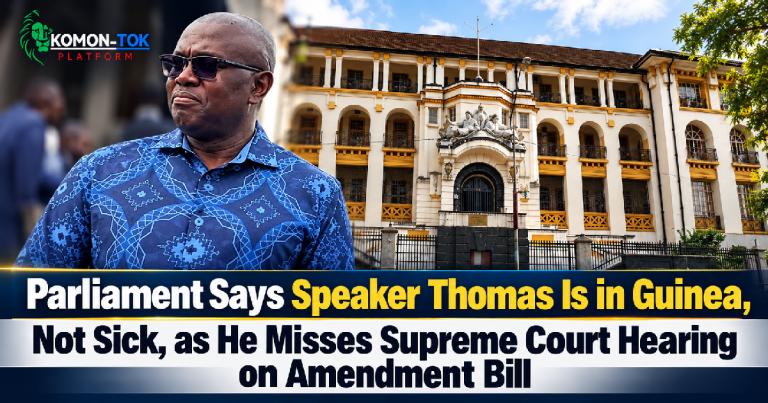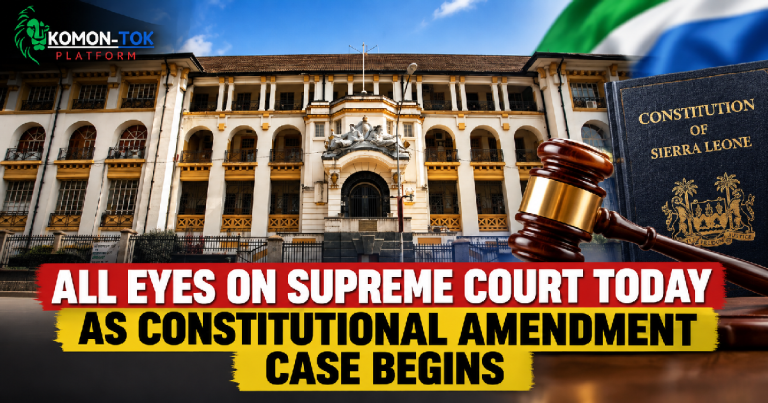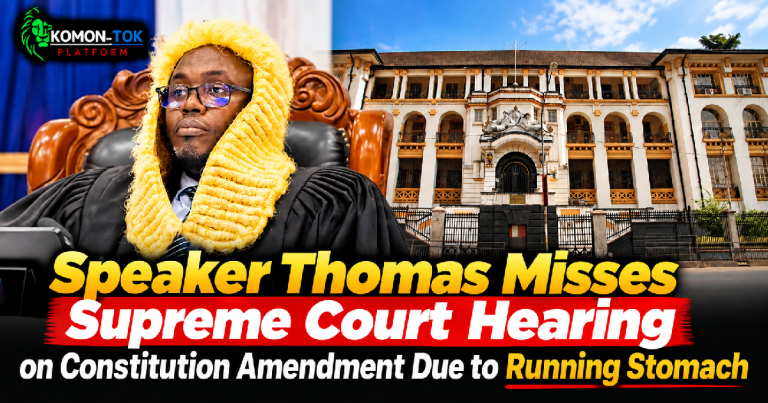

There was brief tension inside the Supreme Court this morning as the hearing on the Constitutional Amendment Bill started.
The problem started when lawyer for the APC, Joseph Fitzgerald Kamara, known as JFK, told the court that the Attorney-General’s Office had not filed all the papers it was supposed to file.
JFK, who is a former Attorney-General and former head of the Anti-Corruption Commission, said the State had not filed its Statement of Case. This is the document where government explains its own side and answers the questions raised by the people who took the matter to court.
He told the judges that it was not fair for his clients to be ready while the other side is not ready.
Chief Justice Komba Kamanda, who is leading the panel of judges, quickly responded. He told all lawyers in the courtroom to remember that the Supreme Court is not a political platform.
He said the court is built on independence and integrity, and all lawyers must respect that.
JFK stood his ground. He said his team came to court to treat the matter seriously and they expect the same from the State.
The exchange became heated for some minutes, with voices raised between the two senior legal figures. To cool down the situation, the court decided to stand down the matter for a short break.
Court proceedings are expected to continue after the break.
Today is the day the Supreme Court is hearing all cases about the Constitutional Amendment Bill 2025.
As we reported earlier, Parliament passed the Bill on 10 August, but APC MPs walked out before the vote. Speaker Segepoh Solomon Thomas said it passed with majority of members present. But APC and many lawyers say the 1991 Constitution says you need two-thirds of all 149 MPs – that is 100 MPs.
President Julius Maada Bio did not sign the Bill. He sent it to the Supreme Court under Section 122(1) after a petition from Institute for Governance Reform (IGR). The APC and MP Osman Timbo also filed their own cases.
The Bill wants to change many things, including reducing the percentage to win presidential election from 55% to 50% plus one, changing to Proportional Representation, and giving 30% of party positions to women.
This is the first time the Supreme Court has allowed live broadcast of a constitutional case. SLAJ requested it and Chief Justice approved it on 6 October.
Ten media houses are inside the court. The Independent Radio Network (IRN) is broadcasting live on more than 40 radio stations across the country, and major TV stations are also showing it.
The court says no commentary or analysis should be done while the case is still in court.