
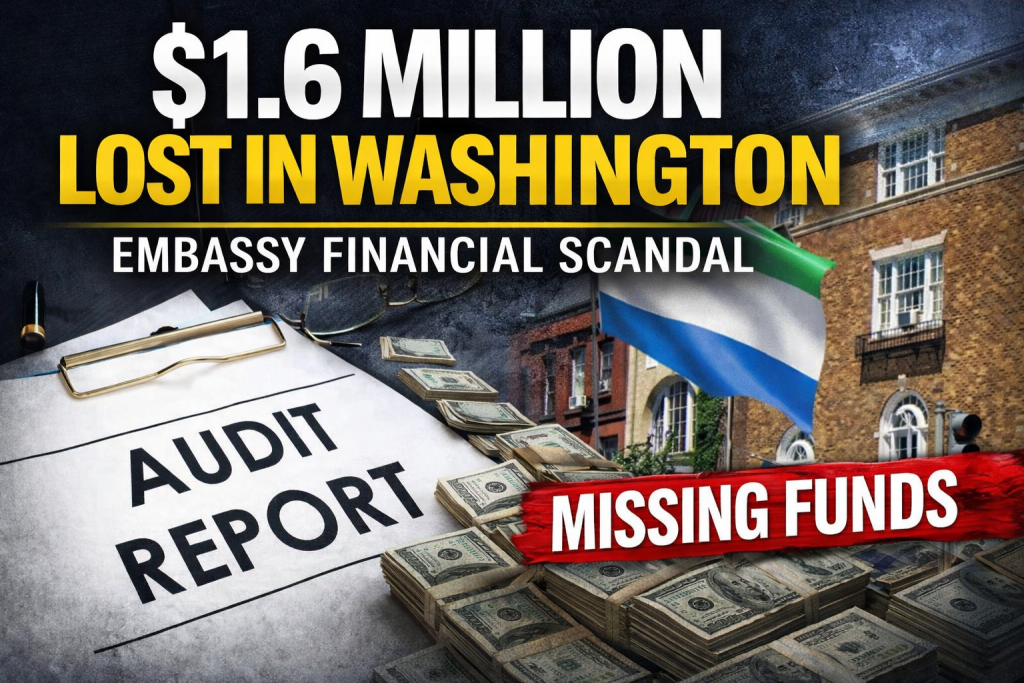
A damning audit has uncovered extensive financial mismanagement at Sierra Leone’s Embassy in Washington DC, with more than US$1.6 million in public funds unaccounted for over a three-year period.
According to the 2024 report issued by the Auditor General of Sierra Leone, the embassy generated approximately US$1.84 million in consular fees between 2022 and 2024. Of that amount, only about US$205,000—roughly 11 percent—was paid into the country’s Consolidated Fund, leaving the vast majority of the revenue outside government accounts.
The report highlights a long-standing failure by oversight institutions to enforce compliance. Despite repeated audit recommendations, there was no evidence that the Ministry of Finance or the Ministry of Foreign Affairs and International Cooperation took effective steps to ensure that all embassy revenues were properly remitted to the state.
Auditors also flagged an additional lapse involving staff remuneration. A sum of US$73,000, paid as salary for a locally recruited staff member but never claimed, was not returned to government accounts. The report warns that the handling of the funds raises the risk of unauthorized personal use.
The findings point to weak internal controls and inadequate supervision at the Sierra Leone Embassy Washington DC, exposing public resources to potential misuse.
In response, the Auditor General issued firm directives. The Ministry of Finance and the Ministry of Foreign Affairs were instructed to establish stronger safeguards for revenue generated by foreign missions. The Head of Chancery in Washington DC was ordered to immediately remit all consular fees to the Consolidated Fund and to obtain prior approval before any related expenditure. The Financial Attaché was also directed to deposit the unclaimed US$73,000 without delay, in line with public financial management regulations.
The report once again underscores persistent accountability challenges within Sierra Leone’s overseas missions, warning that without stricter controls and enforcement, revenues generated from the diaspora will remain vulnerable, undermining broader efforts to promote transparency and fiscal discipline.
About The Author