
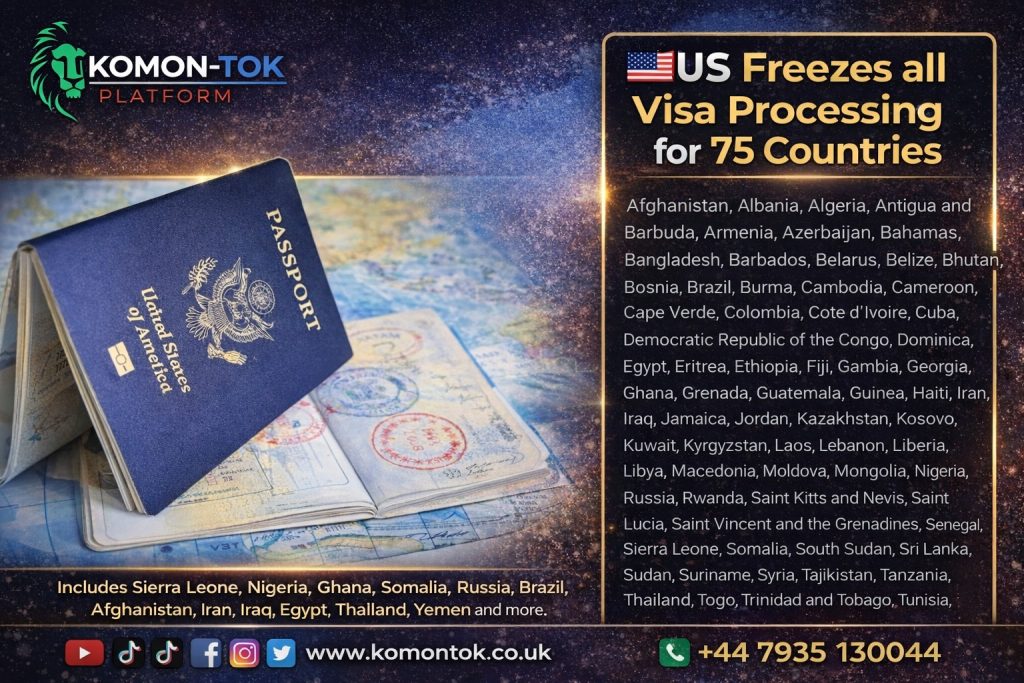
The United States has announced an indefinite suspension of immigrant visa processing for nationals of 75 countries, effective 21 January 2026, as part of President Donald Trump’s intensified immigration enforcement policies. The decision, confirmed by the US State Department, marks a major shift in US immigration practice and has generated widespread international concern.
The suspension applies specifically to immigrant visas, which are issued to individuals seeking lawful permanent residence (green cards) in the United States. According to the State Department, US consular officers worldwide have been directed to pause or refuse immigrant visas that have already been approved but not yet printed or issued. The pause is intended to allow a broad reassessment of security screening and vetting procedures under existing US immigration law.
The policy affects a geographically diverse group of countries across Africa, Asia, the Middle East, Latin America, and Eastern Europe. Countries identified in official briefings and media reports include Russia, Pakistan, Bangladesh, Thailand, Nigeria, Sierra Leone, Ghana, Ethiopia, Haiti, Iran, Iraq, Syria, Afghanistan, Sudan, Somalia, Cuba, and Libya, among many others. The scale of the suspension makes it one of the most far-reaching visa restrictions announced in recent years.
The lack of a clear end date or detailed exemption framework has created uncertainty for families awaiting reunification, skilled workers, and diversity visa applicants. Critics argue the policy risks undermining humanitarian commitments and economic migration, while supporters maintain it strengthens national security and immigration oversight. The announcement has also raised questions about its potential legal challenges and long-term impact on global migration to the United States.
References
- US Department of State, official statements on immigrant visa processing (January 2026)
- Reporting by international media outlets including Reuters, Associated Press, and BBC News