
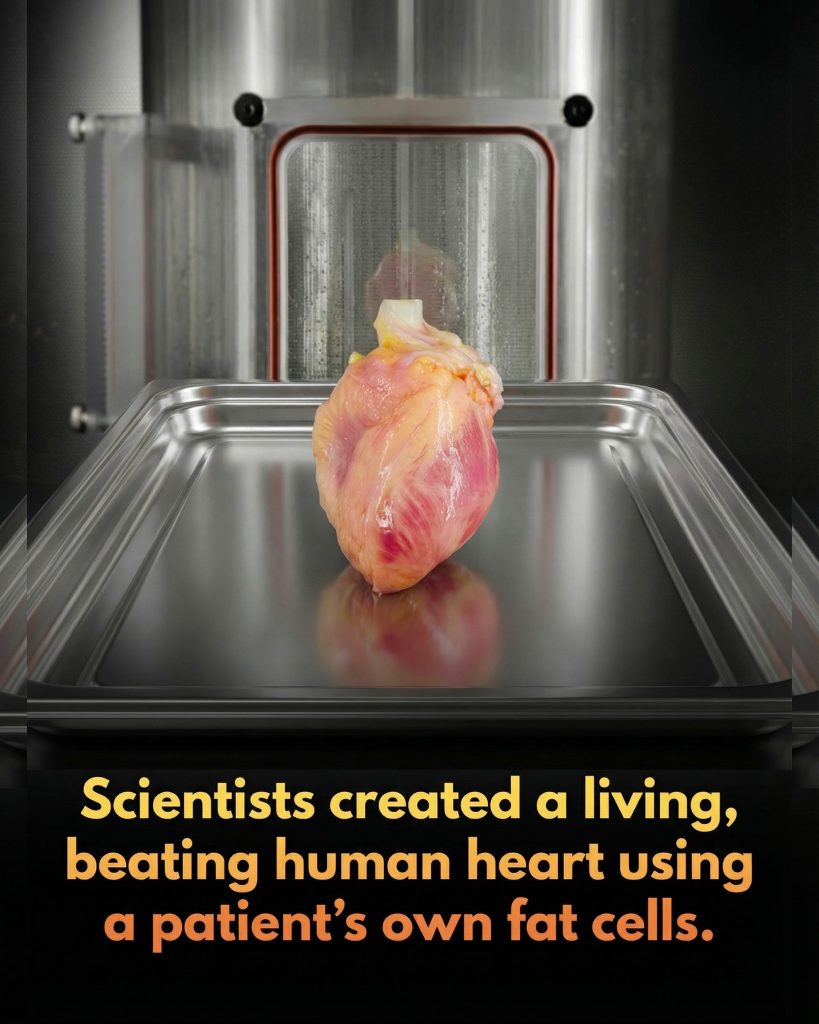
Israeli researchers at Tel Aviv University have achieved a landmark breakthrough by 3D-printing the world’s first fully vascularized heart using human cells and biological materials. Unlike earlier efforts that produced only structural scaffolds or non-cellular models, this miniature heart—about the size of a rabbit’s—features blood vessels, chambers, and the intricate architecture required for cardiac function.
The team created a customized “bioink” from a patient’s own fatty tissue, reprogramming it into stem cells and then differentiating those cells into cardiac and vascular tissue. Because the printed organ is biologically matched to the patient, the risk of immune rejection is significantly reduced.
Although the heart does not yet beat and cannot withstand the pressures of full blood circulation, the achievement represents a major proof of concept. Researchers believe this technology could ultimately transform the treatment of heart failure, where donor shortages claim thousands of lives each year. With further advances in structural integrity and cellular coordination, scientists anticipate that on-demand printing of functional human hearts in hospitals could become feasible within the next decade, reshaping the future of cardiovascular medicine.
source: Freeman, D.. Scientists create world’s first 3D-printed heart using human cells. NBC News MACH.