By Reporter J
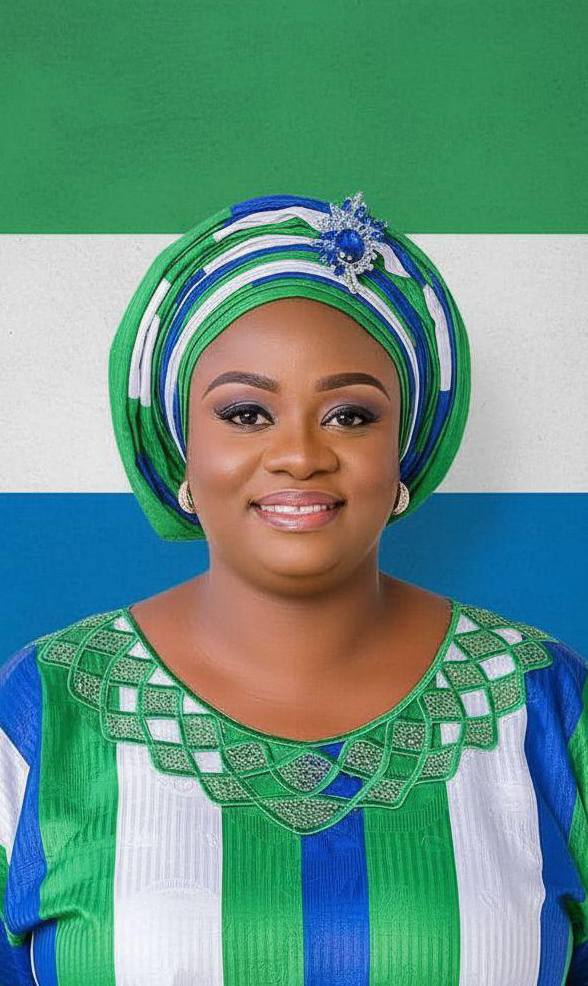
Dr. Sylvia Olayinka Blyden, renowned media influencer, political analyst, and former presidential aspirant, has expressed her support for the United States’ recent decision to impose a travel ban on citizens of Sierra Leone. At the same time, she emphasized the need for ongoing cooperation between the two nations to address the implications of such measures.
Speaking on the matter, Dr. Blyden referenced the recent annual Christmas card sent by the U.S. Embassy in Freetown, which she received on behalf of the APC National Secretariat. She described the gesture as “a reflection of goodwill and friendship between the United States and Sierra Leone.”
Dr. Blyden noted that she has thoroughly reviewed President Donald J. Trump’s latest proclamation on the travel ban, as well as the partial ban introduced in June. She acknowledged the U.S. leadership’s responsibility to protect its citizens and expressed understanding for the steps taken.
Highlighting her personal connection with the United States, Dr. Blyden recalled her experience being granted political asylum in 1998. During her stay, she became CEO of multiple companies in Washington D.C., later expanding her ventures across West Africa, including Nigeria, Senegal, The Gambia, and Sierra Leone. She also held official U.S. government travel documents issued under the United Nations, which she continues to preserve.
Even after it became safe to return home, Dr. Blyden said she was offered permanent U.S. residency, which she formally declined to contribute to the rebuilding of post-war Sierra Leone. She described this decision as a reflection of her patriotism and commitment to national development.
“While I respect and admire the United States for safeguarding its citizens, it remains vital for Sierra Leone to prioritize good governance and national progress,” Dr. Blyden stated.
The announcement has generated mixed reactions among Sierra Leoneans. Some citizens praised her stance as diplomatic and forward-looking, while others criticized her support for the ban, describing it as unnecessary and overly accommodating to foreign interests. One commenter remarked, “The ban has absolutely nothing to do with Sierra Leoneans; it is about American interests. We should focus on putting our country first.”
Further comments from Dr. Blyden regarding the travel ban are expected in the coming days as discussions on the matter continue both locally and internationally.