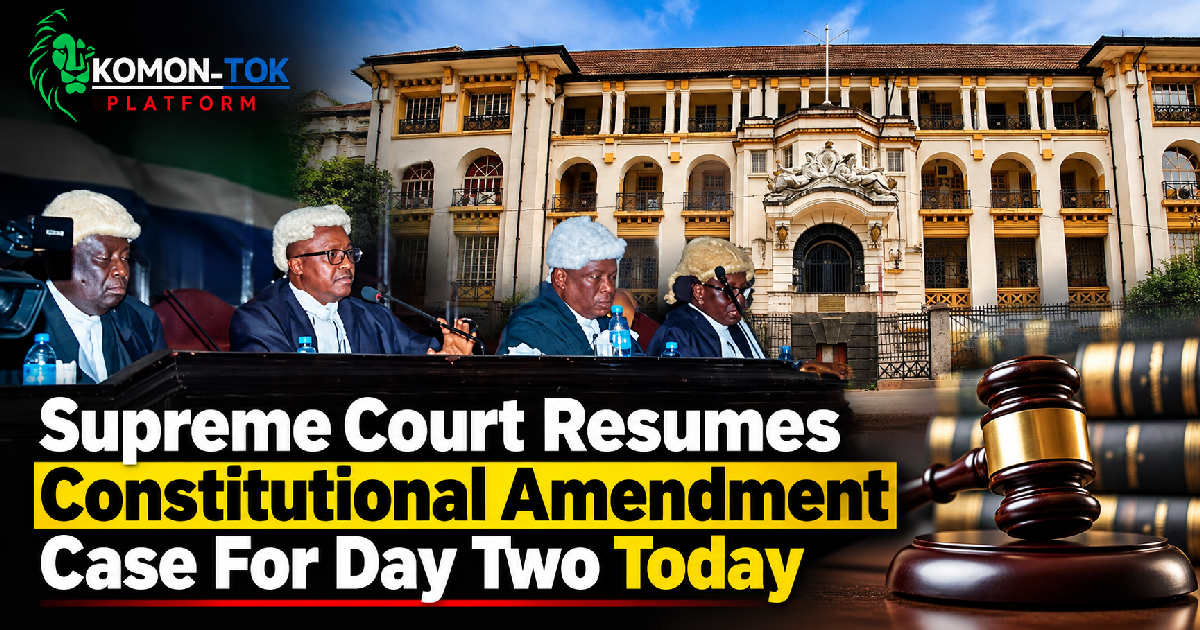
The Supreme Court of Sierra Leone will continue today the hearing of the big constitutional case about how to change the 1991 Constitution.
It is a rainy morning in Freetown. There is calm around the Supreme Court building at Siaka Stevens Street. Lawyers, journalists and other people are slowly coming in for the second day of hearing.
The case is about whether you can use only Section 91(1) to change non-entrenched parts of the Constitution.
The argument started after Parliament passed the Constitution of Sierra Leone (Amendment) Bill, 2025 on 10 August 2026. The Clerk said 97 MPs were present and voted yes. Speaker Segepoh Solomon Thomas ruled that the Bill had passed.
But opposition APC MPs had walked out before the vote. They and many lawyers say Section 108 of the Constitution says you need two-thirds of all MPs – that means 100 out of 149 – to change the Constitution, not just majority of those present. They also say the Bill was not published properly before passing, as required by Section 108(3).
President Julius Maada Bio did not sign the Bill. After he received a petition from the Institute for Governance Reform (IGR) on 4 September, he used Section 122(1) to refer the matter to the Supreme Court for interpretation.
Speaker Thomas also referred his own question to the Court about the two-thirds rule.
So now the Supreme Court has to decide: Can Parliament pass a constitutional amendment with just 97 votes, or does it need 100 votes?
Yesterday, Wednesday 7 October, was full of drama:
1. Speaker Segepoh Thomas was absent. His lawyer, Hon. Hindolo Gevao Esq., told the Court the Speaker was sick with diarrhoea (running stomach).
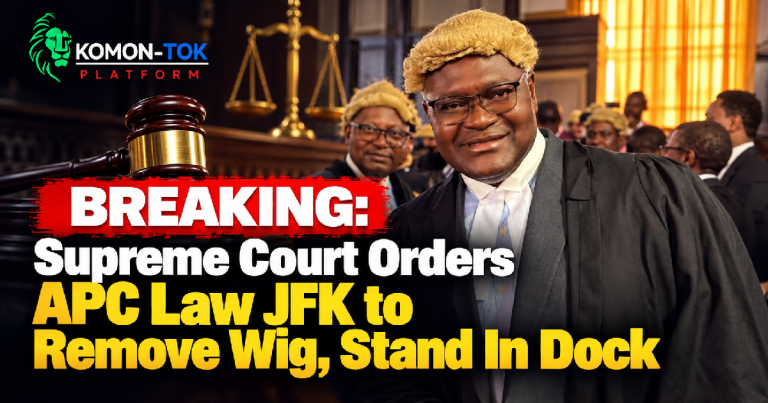
2. The main clash was between Chief Justice Komba Kamanda and Joseph Fitzgerald Kamara (JFK), lawyer for MP Osman Timbo.
JFK raised preliminary objection. He said the Office of the Attorney-General has no right to be in the case and to ask for consolidation of three cases, because the AG did not file Statement of Defence as required by Rule 92(1) of the Supreme Court Rules, 1982.
The Court, led by Chief Justice Kamanda, unanimously overruled JFK. The Chief Justice told him, “This Court is not a political forum.”
The Court granted the application by the State, represented by the Attorney-General, to consolidate the three separate actions against the State into one big case.
The three cases are:
– The Reference from the President
– The Reference from the Speaker
– The case filed by Hon. Osman Timbo and others
Parliament’s legal team also countered the Speaker’s lawyer yesterday, claiming the Speaker was not sick in Freetown but was in Guinea.
With the preliminary objections dismissed, the Court will now hear the substantive arguments on the real constitutional questions under Sections 91 and 108.
All eyes are on the Supreme Court, which has allowed live broadcast of the proceedings for the first time in our history.
The decision will determine the future of the 2025 Amendment Bill, which wants to reduce the presidential winning threshold from 55% to 50% plus one, among other changes.