
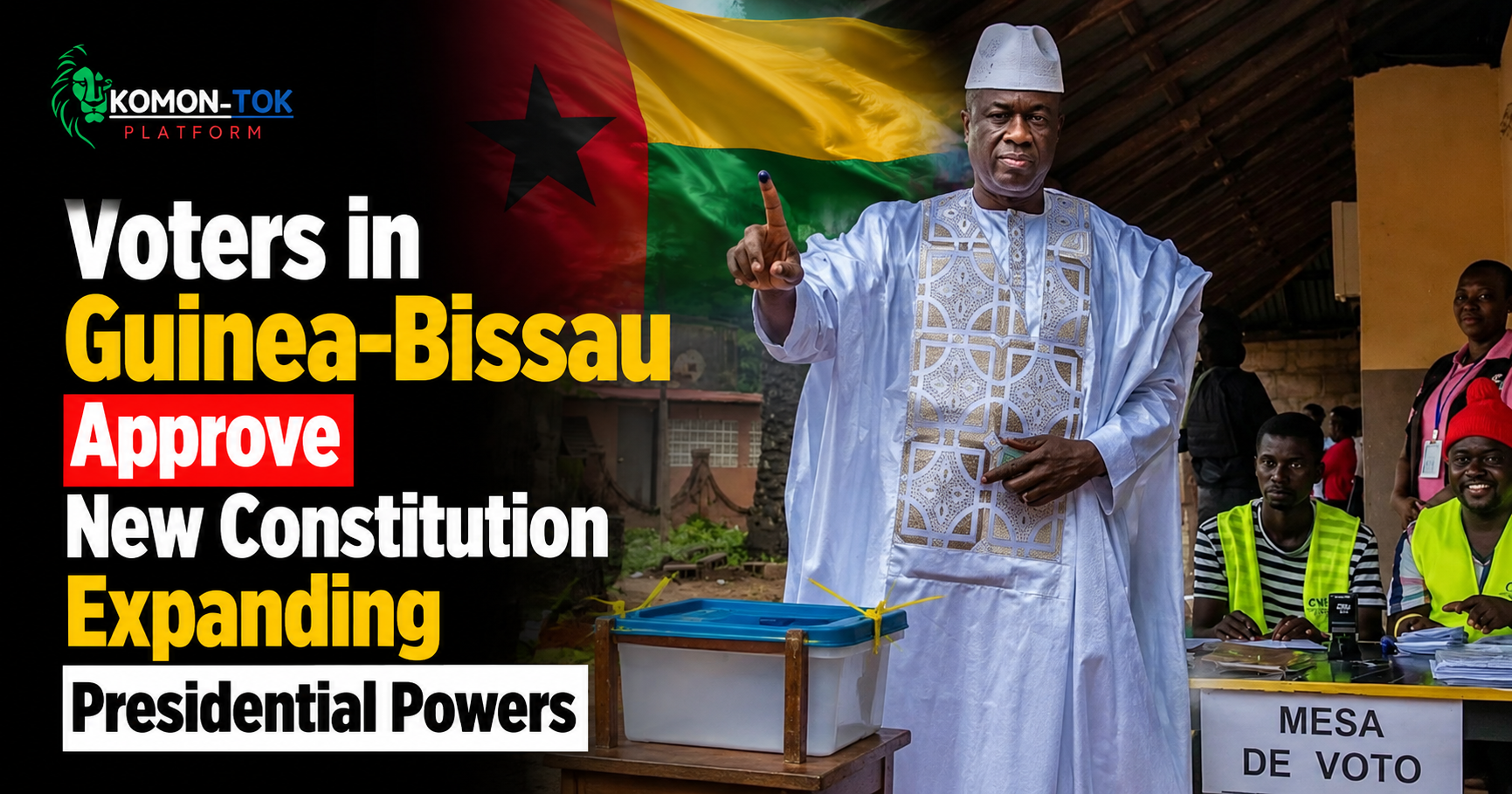
Voters in Guinea-Bissau have approved a new constitution that significantly expands presidential powers ahead of general elections later this year.
The referendum, held on Sunday, was organised by the military government that seized power in November 2025 after a disputed presidential election. Provisional results from the National Electoral Commission showed about 70% of voters backed the changes, with 30% opposed. Turnout was nearly 60%.
The reforms allow the president to appoint and dismiss the prime minister and cabinet, create or abolish ministries, and dissolve parliament during a grave political crisis. They strengthen the presidency at the expense of the prime minister under the country’s semi-presidential system. Previously, the legislature appointed a prime minister from the parliamentary majority, an arrangement the military authorities said fuelled instability through repeated disputes.
The five-year presidential term and two-term limit remain unchanged. The new constitution also reduces parliamentary seats from 102 to 65 and electoral constituencies from 29 to 12. It requires presidential candidates to have lived continuously in Guinea-Bissau for the five years before an election.
Transitional President Gen Horta N’Tam’s government argued the changes are needed to end chronic political disputes. The main opposition party, the African Party for the Independence of Guinea and Cape Verde (PAIGC), boycotted the vote, warning it lacked safeguards and risked concentrating excessive power in the presidency. PAIGC leader Domingos Simões Pereira accused organisers of seeking to undermine democracy.
Guinea-Bissau, one of the world’s poorest nations, has suffered multiple coups since independence from Portugal in 1974. The United Nations has described it as a “narco-state” due to its use by drug traffickers. December’s elections are intended to restore civilian rule, though critics question whether the expanded presidential powers will stabilise or further strain the country’s fragile politics.